
Description
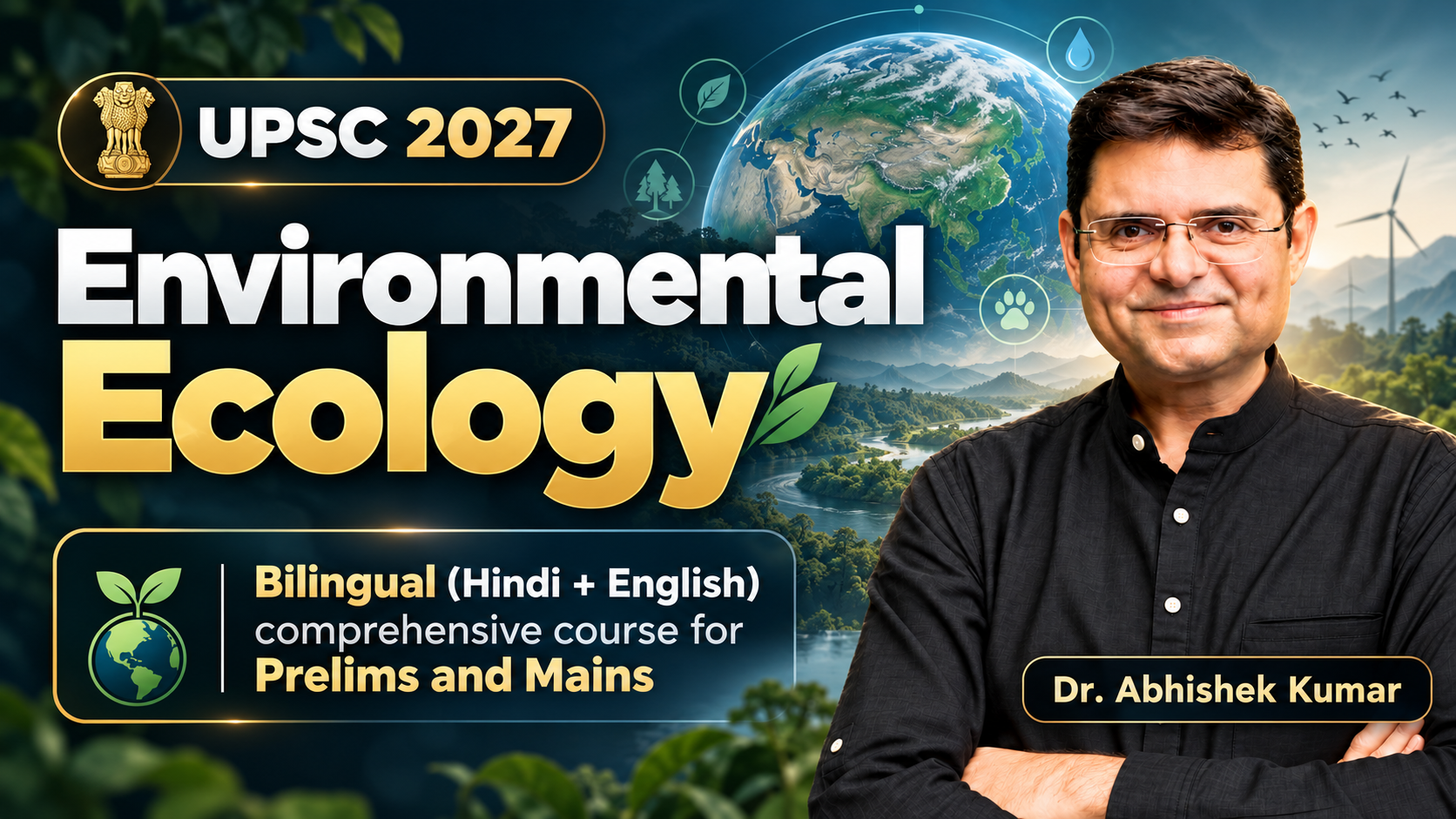
पर्यावरणीय पारिस्थितिकी (Environmental Ecology): Live Online Course for UPSC 2027
कोर्स परिचय:
संघ लोक सेवा आयोग (UPSC) की सिविल सेवा परीक्षा में Environmental Ecology एक अत्यंत महत्वपूर्ण क्षेत्र है, जहाँ प्रारंभिक परीक्षा में लगभग 16 से 18 प्रश्न प्रति वर्ष पूछे जाते हैं और main परीक्षा के तीसरे पत्र में कम से कम 3 प्रश्न पूछे जाते हैं. साथ ही यह एक ऐसा क्षेत्र है जहाँ कोई Syllabus निर्धारित नहीं है. प्रश्नों का कोई स्थिर Pattern नहीं है. और अधिकांश प्रश्न समसामयिक घटनाओं से बनाए जाते हैं. ऐसे विषय में अनुमान के भरोसे चलना जोखिम भरा है, और बिखरी सामग्री के सहारे चलना उससे भी अधिक.
यह कोर्स इसी अनिश्चितता को एक सुव्यवस्थित रास्ते में बदलने के लिए बनाया गया है. गहन शोध, समसामयिक Updates और चरणबद्ध शिक्षण के साथ, जो NCERT स्तर की मूल बातों से शुरू होकर परीक्षा-स्तर की गहराई तक ले जाता है. यह Live Online Course Prelims और Mains, दोनों की आवश्यकताओं को संपूर्णता से कवर करता है.
माध्यम हिंदी और अंग्रेज़ी का सहज मिश्रण है, ताकि दोनों माध्यमों के अभ्यर्थी बराबरी से जुड़ सकें.
मुख्य प्रशिक्षक डॉ. अभिषेक कुमार हैं, और कोर्स 22 अक्टूबर 2026 से प्रारंभ हो रहा है.
कोर्स की प्रमुख विशेषताएँ
- Course की प्रकृति: Live-online (यदि कोई class छूट जाती है, तो प्रत्येक class की recording भी उपलब्ध होगी)
- मुख्य प्रशिक्षक: Dr. Abhishek Kumar
- अन्य विशेषज्ञ: Professor Dr. Yadav, Doctor Pradeep, Khushmeet Kaur ma'am
- माध्यम: अंग्रेजी और हिंदी का सहज मिश्रण
- Notes एवं test: अंग्रेजी और हिंदी में अलग-अलग उपलब्ध
- Online कक्षाओं का संचालन: IAS GS app पर (Android, iOS phones,tablets तथा laptop के लिए app उपलब्ध)
- कक्षाएं प्रारंभ: 22 October 2026
- Course की validity: 31 October 2027 तक
- सप्ताह में 5 से 6 दिन Live Classes. छूटी हुई कक्षा की Recording पुनरावृत्ति के लिए सदैव उपलब्ध.
- 12 Mega Chapters में Prelims और Mains का संपूर्ण कवरेज.
- प्रत्येक Mega Chapter के बाद 50 प्रश्नों का Test.
- कुल 600 प्रश्नों का अभ्यास.
- कक्षाओं के समापन के बाद 1 grand test
- प्रत्येक Chapter के साथ संक्षिप्त किंतु संपूर्ण PDF Notes. उक्त PDF notes अंग्रेजी और हिंदी में पृथक उपलब्ध होंगे.
- Live Sessions में सभी Doubts का समाधान.
- समाचार-पत्रों और प्रामाणिक स्रोतों से पूर्णतः updated course
- क्रमबद्ध approach: शुरुआत NCERT स्तर से. जो विद्यार्थी सभी कक्षाएँ क्रम से करेगा, उसकी पृष्ठभूमि चाहे जो हो, वह प्रत्येक विषय समझ सकेगा.
- गहन शिक्षण: जहाँ UPSC गहराई माँगता है, वहाँ सतही नहीं, गहन शिक्षण.
- Engaging अध्यापन approach: आधुनिक Illustrations, बोर्ड पर हाथ से बने Flowcharts, Quizzes और Interactive Exercises.
- पिछले किसी भी संस्करण की तुलना में एक विशद course: पिछले एक वर्ष के Current Developments से उभरे नए आयाम. 2025 और 2026 की तुलना में कई नए विषय जोड़े गए हैं.
- कई नए module को पहली बार जोड़ा गया है: Agricultural Science, Agricultural Ecology, Animal Diversity, Animal Behaviour और Minor Species जैसे नए Modules.
- नए module के लिए विशिष्ट विशेषज्ञों को भी पहली बार course के साथ जोड़ा गया है
- बैच प्रारंभ होने से पूर्व निःशुल्क Induction Class.
संकाय
प्रत्येक विषय एक विशेषज्ञ द्वारा पढ़ाया जाएगा. कोर्स का लगभग 80 प्रतिशत भाग डॉ. अभिषेक कुमार लेंगे. नए जोड़े गए विशिष्ट खंडों के लिए 3 विशेषज्ञ उनके साथ जुड़ेंगे.
- डॉ. अभिषेक कुमार (मुख्य प्रशिक्षक): कोर्स का मूल भाग.
- प्रोफेसर यादव, दिल्ली विश्वविद्यालय: Zoologist, जो दिल्ली विश्वविद्यालय के एक प्रतिष्ठित महाविद्यालय में अध्यापन करती हैं. Animal Diversity और Animal Behaviour.
- कुशमीत कौर: Minor Species, जो प्रायः परीक्षा में आती हैं.
- डॉ. प्रदीप: Agriculture और Agricultural Ecology. उनके पास कृषि विज्ञान में स्नातकोत्तर (Master’s) और पीएचडी (PhD) की उपाधि है, साथ ही वे विधि स्नातक (LLB) भी हैं.
यह कोर्स किन समस्याओं का समाधान करता है
- Ecology के लिए UPSC ने कोई Syllabus निर्दिष्ट नहीं किया है.
- प्रश्नों में कोई स्पष्ट और दोहराया जाने वाला Trend नहीं है. कभी Species, कभी Protected Areas और कभी Laws व Treaties पर ध्यान रहता है. कई प्रश्न लगभग अप्रत्याशित ढंग से आते हैं.
- 16 से 18 प्रश्नों में से कम से कम 12 से 14 प्रश्न Current Developments से प्रेरित होते हैं. जो अभ्यर्थी वर्ष भर समाचार-पत्र नहीं पढ़ते या Current Affairs में निरंतर नहीं रहे, उनके लिए यह भाग कठिन है.
- बाज़ार में उपलब्ध कोई पुस्तक या सामग्री परीक्षा की माँग के साथ न्याय नहीं करती.
- Mains के प्रश्नों में गहरी और बहुआयामी समझ अपेक्षित है, जिसके लिए उपलब्ध सामग्री और भी अपर्याप्त है.
- बाज़ार में उपलब्ध Tests UPSC के वास्तविक प्रश्न-स्वरूप से मेल नहीं खाते.
शोध के स्रोत
हमने स्रोतों का एक व्यापक आधार इस course के लिए अपनाया है. संभावतः उपलब्ध किसी भी अन्य course या अध्ययन सामग्री का संदर्भाधार इतना व्यापक नहीं है.
- राष्ट्रीय शैक्षिक अनुसंधान और प्रशिक्षण परिषद (NCERT) और प्रमुख Ecology पुस्तकें.
- PD Sharma, Michael Begon, Miller तथा Odum की Ecology and Environment की पाठ्यपुस्तकें
- Botany और Zoology के विशिष्ट स्रोत, ताकि प्रत्येक महत्वपूर्ण Species की सार्थक और प्रासंगिक Profile बन सके.
- पत्र सूचना कार्यालय (PIB) के विषय प्रासंगिक press release
- The Hindu और Indian Express.
- National Geographic और ब्रिटिश ब्रॉडकास्टिंग कॉर्पोरेशन (BBC).
- Down to Earth पत्रिका, जिसका हम निरंतर अनुसरण करते हैं. Ecosystem और Sustainability के विषयों पर यह अत्यंत उत्कृष्ट है.
- Science Reporter पत्रिका
- Sanctuary Asia पत्रिका
इस शोध के बाद सब कुछ UPSC के अनुरूप सरल और संरचित किया गया है.
कोर्स की संरचना
पूरा कोर्स 12 Mega Chapters में विभाजित है. प्रत्येक Chapter इस क्रम में चलता है.
- Live Classes, सप्ताह में 5 से 6 दिन.
- Chapter के साथ संक्षिप्त किंतु संपूर्ण PDF Notes.
- Chapter के अंत में 50 प्रश्नों का Test.
- Live Sessions में Doubts का समाधान.
- पुनरावृत्ति के लिए Recording.
12 Chapters के 12 Tests मिलाकर आप कुल 600 प्रश्न हल करेंगे. Prelim के पूर्व आप 100 प्रश्नों का एक grand test भी देंगे.
मुख्य परीक्षा के पूर्व विशिष्ट classes के माध्यम से Environmental Ecology में answer framing भी सिखाया जाएगा.
कोर्स के तीन चरण
- Phase 1 (22 अक्टूबर से 15-30 दिसंबर 2026): इसी चरण में लगभग 95 प्रतिशत सामग्री पूर्ण होगी.
- Phase 2 (अप्रैल 2027 के अंत में, एक सप्ताह): Phase 1 की नींव पर Prelims के लिए Updates.
- Phase 3 (जुलाई 2027 के मध्य में, दो सप्ताह, 10 Sessions): Mains के लिए संपूर्ण Update और व्यापक Answer Framing.
प्रवेश कैसे लें
कोर्स से जुड़ी कोई भी अतिरिक्त जानकारी, जो ऊपर नहीं दी गई है, प्राप्त करने और प्रवेश की प्रक्रिया जानने के लिए +91 98114 33228 पर संपर्क करें.
बैच प्रारंभ होने से पूर्व एक निःशुल्क Induction Class आयोजित की जाएगी, जिसमें आप कोर्स की कार्यपद्धति को स्वयं देख सकते हैं.
कोर्स 22 अक्टूबर 2026 से Live प्रारंभ हो रहा है.
Refund Policy
ऑनलाइन कोर्स एक अमूर्त (Intangible) उत्पाद है. कोर्स की संपूर्ण जानकारी हम प्रवेश से पहले उपलब्ध कराते हैं, और बैच प्रारंभ होने से पूर्व निःशुल्क Induction Class भी आयोजित करते हैं. अतः प्रवेश लेने के पश्चात कोर्स शुल्क किसी भी परिस्थिति में वापस नहीं किया जाएगा.
केवल एक अपवाद है: यदि हम कोर्स आयोजित करने में असफल रहते हैं.
Environmental Ecology: Live Online Course for UPSC 2027
Course Introduction
In the Civil Services Examination of the Union Public Service Commission (UPSC), Environmental Ecology is a highly important area. About 16 to 18 questions are asked in Prelims every year, and at least 3 questions appear in General Studies Paper III of Mains. Yet this is also an area where no syllabus has been specified. There is no stable pattern in the questions. And most questions are built from current events. In such a subject, relying on guesswork is risky, and relying on scattered material is riskier still.
This course is built to turn that uncertainty into a clear, organised path. It brings together deep research, regular current-affairs updates and step-by-step teaching. The teaching starts from the basics at the level of the National Council of Educational Research and Training (NCERT) and goes up to examination-level depth. This live online course covers the needs of both Prelims and Mains completely.
The medium is an easy mix of Hindi and English, so that aspirants of both mediums can connect equally.
The lead instructor is Dr. Abhishek Kumar, and the course begins on 22 October 2026.
Key Features of the Course
- Nature of the course: Live online. If you miss a class, a recording of every class will also be available.
- Lead instructor: Dr. Abhishek Kumar.
- Other experts: Professor Dr. Yadav, Dr. Pradeep and Khushmeet Kaur.
- Medium: An easy mix of English and Hindi.
- Notes and tests: Available separately in English and Hindi.
- Online classes: Conducted on the IAS GS app. The app is available for Android and iOS phones, tablets and laptops.
- Classes begin: 22 October 2026.
- Course validity: Until 31 October 2027.
- Live classes 5 to 6 days a week. Recordings of missed classes are always available for revision.
- Complete coverage of Prelims and Mains in 12 Mega Chapters.
- A test of 50 questions after every Mega Chapter.
- Practice with 600 questions in all.
- One grand test after the classes conclude.
- Concise yet complete PDF notes with every chapter. These PDF notes will be available separately in English and Hindi.
- All doubts resolved in live sessions.
- A fully updated course, based on newspapers and authentic sources.
- Step-by-step approach: The course starts at NCERT level. A student who attends all classes in sequence will be able to understand every topic, whatever their background.
- In-depth teaching: Wherever UPSC demands depth, the teaching goes deep and does not stay on the surface.
- Engaging teaching approach: Modern illustrations, hand-drawn flowcharts on the board, quizzes and interactive exercises.
- More comprehensive than any earlier version: New dimensions that have emerged from the current developments of the past year. Many new topics have been added compared with 2025 and 2026.
- Several new modules added for the first time: Agricultural Science, Agricultural Ecology, Animal Diversity, Animal Behaviour and Minor Species.
- Specialist experts for the new modules: Experts have been brought into the course for the first time to teach these modules.
- A free induction class before the batch begins.
Faculty
Every topic will be taught by an expert. Dr. Abhishek Kumar will teach roughly 80 per cent of the course. For the newly added specialised sections, three experts will join him.
- Dr. Abhishek Kumar (Lead Instructor): The core of the course.
- Professor Yadav, Delhi University: A zoologist who teaches at a prestigious Delhi University college. Animal Diversity and Animal Behaviour.
- Khushmeet Kaur: Minor Species, which often appear in the examination.
- Dr. Pradeep: Agriculture and Agricultural Ecology. He holds a Master’s degree and a PhD in agricultural science, and is also a Bachelor of Laws (LLB) graduate.
The Problems This Course Solves
- UPSC has not specified any syllabus for Ecology.
- There is no clear, repeating trend in the questions. Sometimes the focus is on species, sometimes on protected areas, and sometimes on laws and treaties. Many questions come in an almost unpredictable way.
- Of the 16 to 18 questions, at least 12 to 14 are driven by current developments. This part is hard for aspirants who do not read the newspaper through the year or have not stayed consistent with current affairs.
- No book or material available in the market does justice to what the examination demands.
- Mains questions expect a deep and multidimensional understanding, and the available material falls even shorter here.
- The tests available in the market do not match the actual pattern of UPSC questions.
Sources Consulted
We have drawn on a very wide base of sources for this course. In all likelihood, no other course or study material available has a reference base this broad.
- NCERT and core ecology books.
- Textbooks on ecology and environment by P. D. Sharma, Michael Begon, Miller and Odum.
- Specialised Botany and Zoology sources, so that a meaningful and relevant profile of every important species can be built.
- Topic-relevant press releases of the Press Information Bureau (PIB).
- The Hindu and Indian Express.
- National Geographic and the British Broadcasting Corporation (BBC).
- Down to Earth magazine, which we follow continuously. It is excellent on ecosystem and sustainability issues.
- Science Reporter magazine.
- Sanctuary Asia magazine.
After this research, everything has been simplified and structured to suit UPSC.
Structure of the Course
The entire course is divided into 12 Mega Chapters. Each chapter runs in this order.
- Live classes, 5 to 6 days a week.
- Concise yet complete PDF notes with the chapter.
- A test of 50 questions at the end of the chapter.
- Doubts resolved in live sessions.
- Recordings for revision.
Across the 12 chapters, the 12 tests add up to 600 questions that you will solve. Before Prelims, you will also take a grand test of 100 questions.
Before Mains, special classes will also teach answer framing in Environmental Ecology.
Three Phases of the Course
- Phase 1 (22 October to 15 to 30 December 2026): Roughly 95 per cent of the material will be completed in this phase alone.
- Phase 2 (late April 2027, one week): Updates for Prelims, building on the foundation of Phase 1.
- Phase 3 (mid-July 2027, two weeks, 10 sessions): A complete update for Mains and extensive answer framing.
How to Take Admission
For any additional information not given above, and to learn the admission process, call +91 98114 33228.
A free induction class will be held before the batch begins, in which you can see the course’s method for yourself.
The course begins live on 22 October 2026.
Refund Policy
An online course is an intangible product. We give you complete information about the course before admission, and we also hold a free induction class before the batch begins. Therefore, once you have taken admission, the course fee will not be refunded under any circumstance.
There is only one exception: if we fail to run the course.